What workflows cover
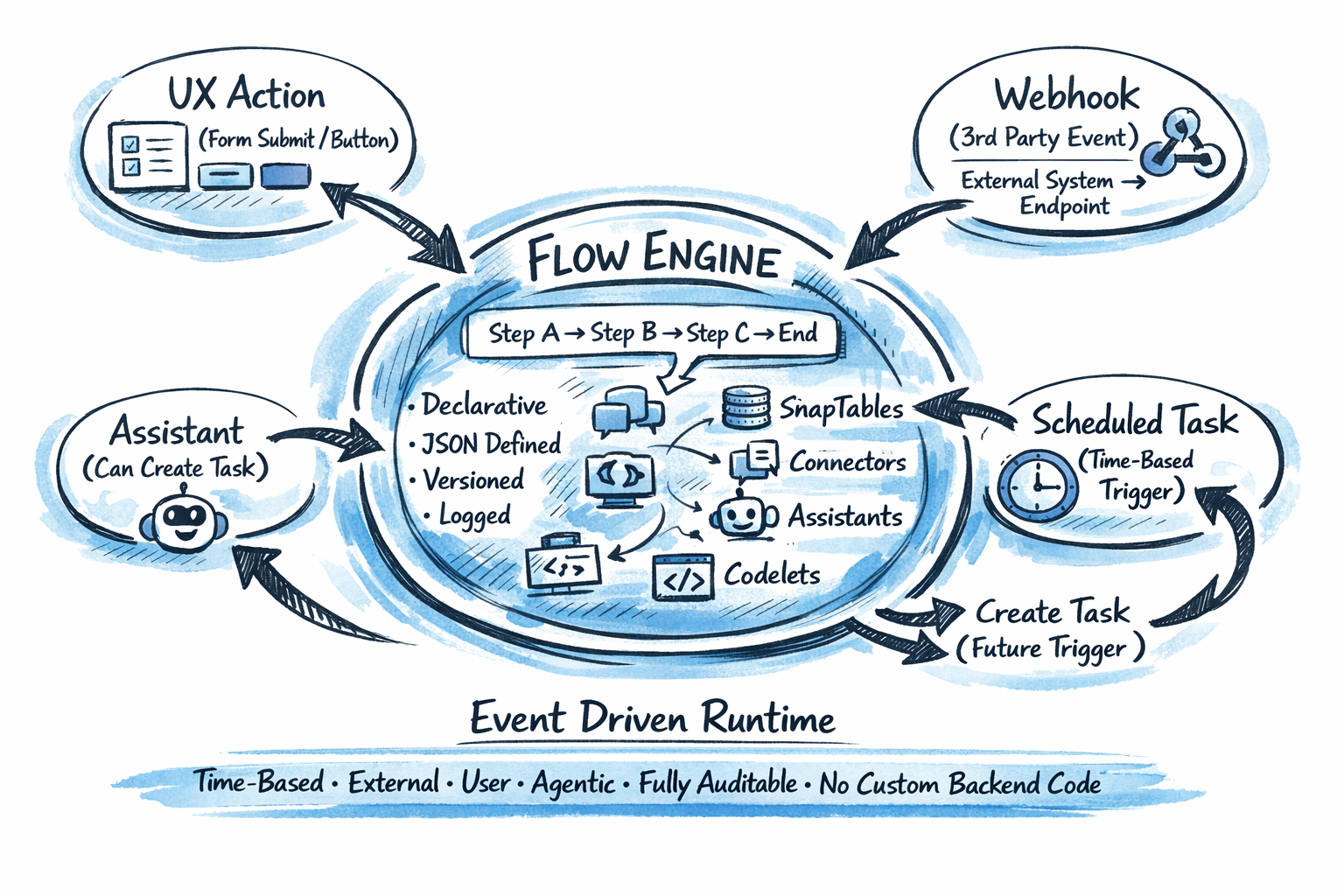
This page is about what starts work and how it moves. It covers tasks, schedules, flows, approvals, webhook-driven triggers, and other event-led process paths. Workflows do not provide the reasoning, record layer, or final artefact by themselves. They coordinate how those capabilities are triggered, sequenced, reviewed, and completed.
Why it matters
Why it matters
Repeatable execution
The same work can follow the same path across teams and time.
Clear handoffs
Human review, AI steps, approvals, and system actions can be sequenced instead of improvised.
More ways to start governed work
The process can begin from a user action, a task, a schedule, a record trigger, or an inbound event.
What value it brings
What value it brings
Less coordination overhead
Teams spend less time stitching tasks together by hand.
Stronger service quality
Important steps are less likely to be skipped or run differently each time.
Better automation readiness
Scheduled, event-driven, approval-based, and multi-step processes can run without losing governance.