At that point the issue is not only model quality. It is work that becomes hard to approve, hard to repeat, and hard to defend once teams, customers, or regulators depend on the outcome.
The problem
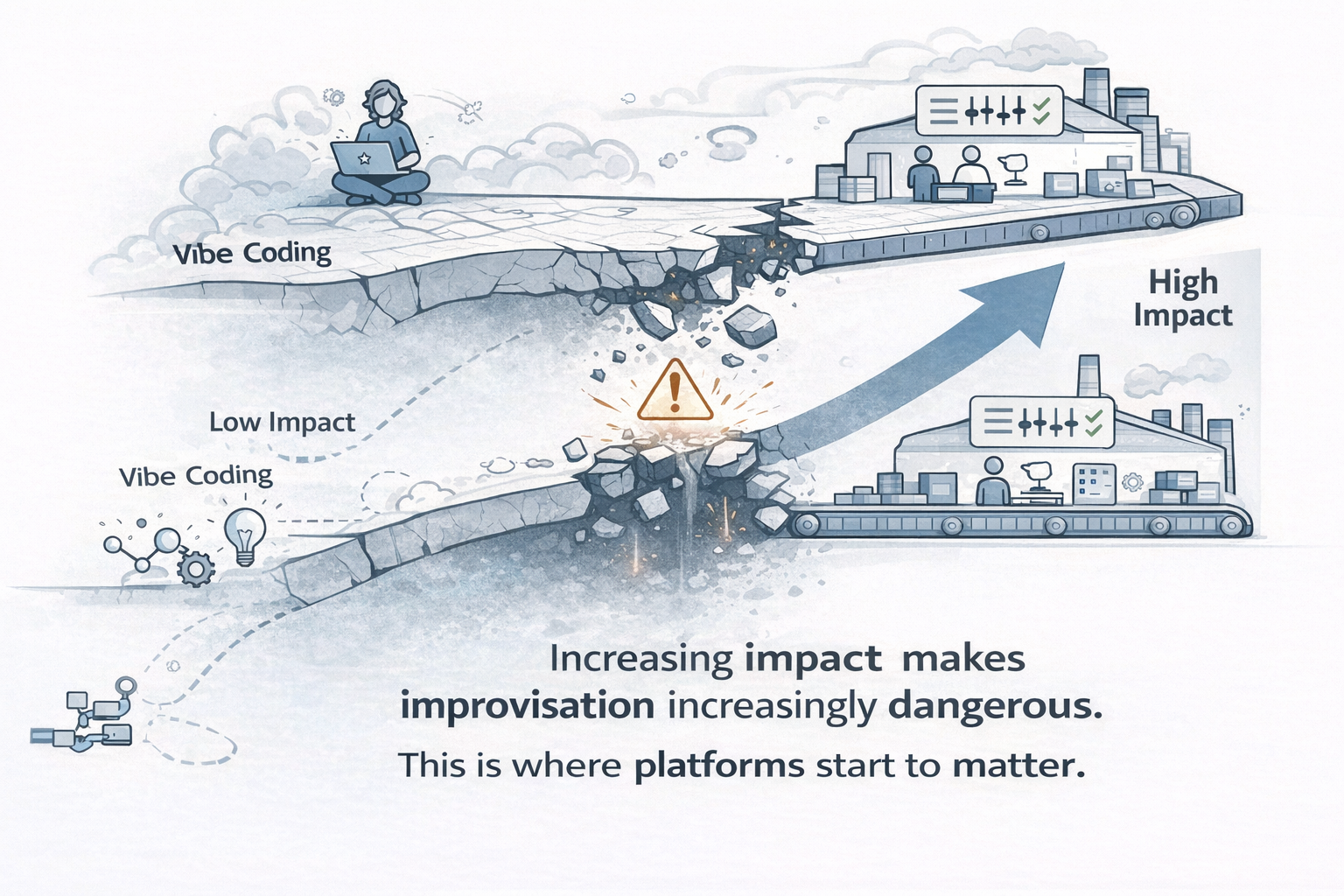
AI usually fails in organisations through weak operating control, not only inaccuracy. The second user turns a tool into a system, and systems create accountability whether teams acknowledge it or not.
From experimentation to operational risk
What changes when AI becomes shared work
What changes when AI becomes shared work
Prompt-led AI
Logic lives inside personal habits and tool choice
Important files, actions, and decisions move through weakly controlled paths
Review starts from an answer, not a shared record of what happened
Reuse creates more inconsistency and review burden, not more confidence
Governed AI execution
Work starts from clear intake and guardrails
Handoffs, approvals, and system participation are made explicit
Documents, records, and outputs stay reviewable over time
Repeat use becomes easier to approve, repeat, and defend
Closing thought
Once AI-enabled work matters, governance stops being optional.
The question is not whether accountability exists. The question is whether the organisation has made it visible and governable.