What agents and assistants are for
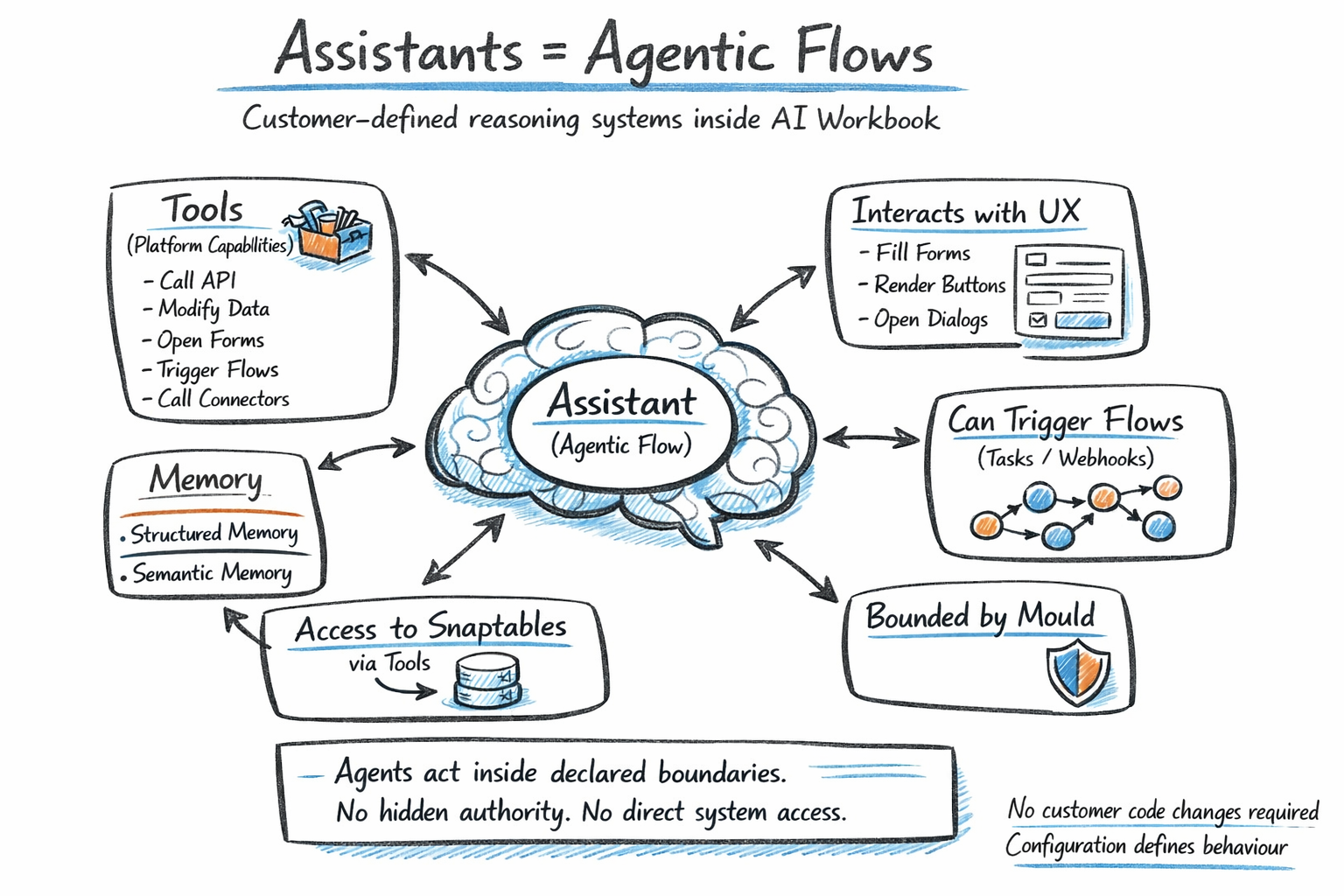
This page is about bounded AI reasoning. Agents can participate in workflows and use connected systems, but their role is to perform defined tasks inside clear limits rather than to act as free-floating operators.
Why it matters
Why it matters
Bounded AI action
Agents work with clear tools and runtime limits instead of operating as free-floating prompts.
Task-specific behavior
The agent performs the reasoning step; the workflow decides when and where that step happens.
Clear accountability
AI supports work, but permissions, approval points, and ownership stay explicit.
What value it brings
What value it brings
More consistent assistance
Teams get repeatable AI support rather than heavily personal prompt craft.
Safer automation
Agent behavior can participate in operational systems without becoming a black box.
Better reuse
Useful AI patterns can be applied across workflows and teams without starting over each time.
Stronger enterprise control
Teams can govern which tools, prompts, and review paths are used instead of leaving that behavior implicit.