
Worked example · Sample data
What governed AI looks like in a Quality 8D workflow
This internal demonstration uses sample supplier-quality data. It illustrates an operating pattern; it does not claim a customer deployment or quantified business outcome.
A quality issue moves through defined stages with connected evidence, selective AI-supported assessment, named human review and a retained decision route.
Why Quality 8D is a useful example
Supplier-quality work brings together structured stages and contextual judgement. Teams need to capture the issue, gather evidence, receive a response, assess its completeness, identify findings and decide whether corrective action is acceptable.
The documented method matters, but so do the handoffs between people, documents and systems. That makes the workflow a useful way to show AI as one participant in a wider operating model.
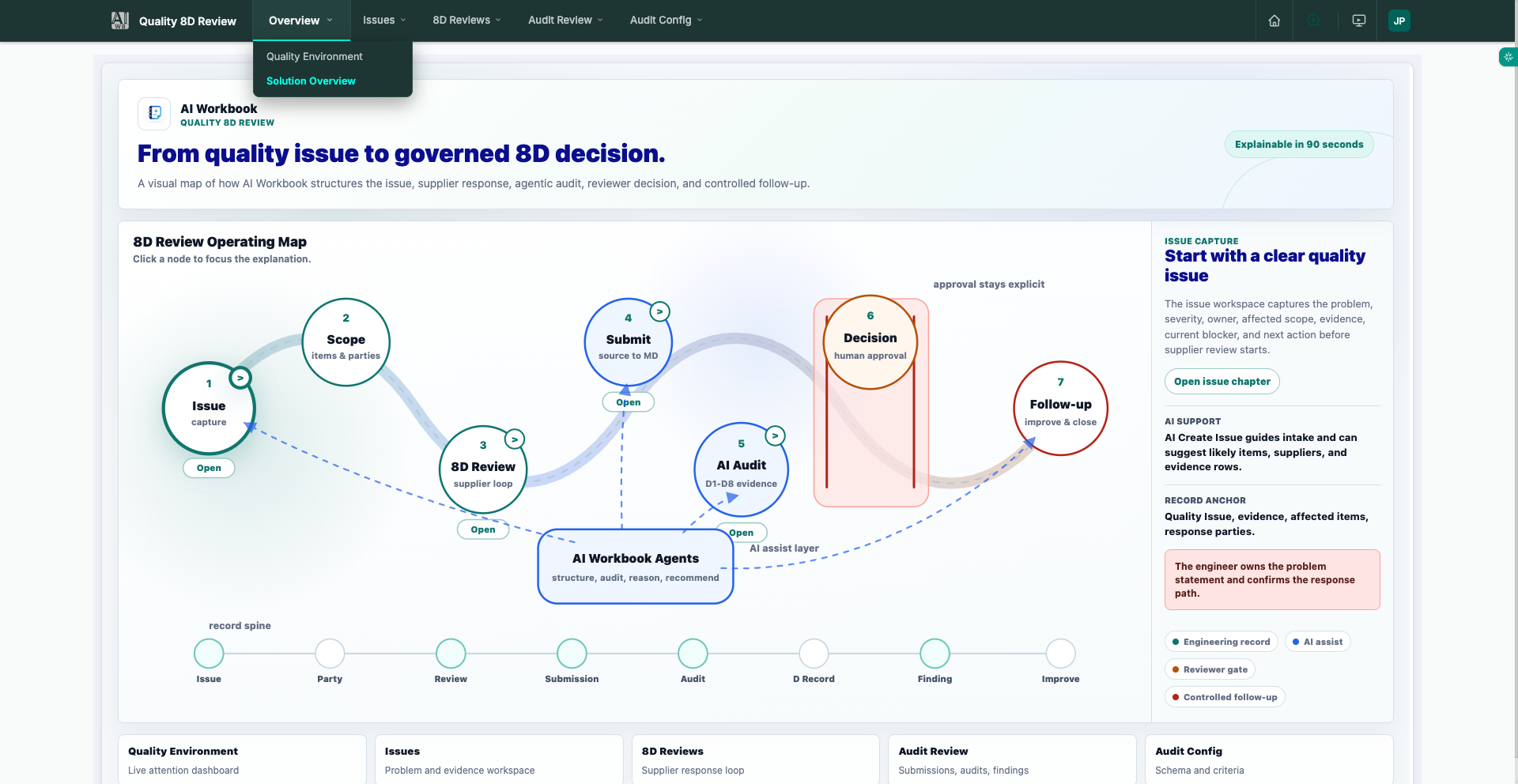
1. Capture the issue and establish ownership
The workflow begins with a structured issue record rather than an isolated email. Key information, ownership, timing and initial evidence are brought into the same route. Predictable validation can identify missing fields and route the case without asking AI to decide severity.
A quality professional remains responsible for the significance of the issue and the action required.
2. Connect the response with its evidence
Supplier material, supporting documents and relevant criteria remain associated with the case. This gives later reviewers a clearer basis for understanding which information was available when an assessment was made.
The demonstration does not imply that every source is automatically trustworthy. Approved context, permissions and source quality still need to be defined for a real solution.
3. Use AI to assist assessment
AI support can compare the response with stated criteria, identify possible gaps and explain why an item may need attention. This is interpretive assistance: it helps the reviewer navigate the material and prepare the next decision.
The recommendation remains visible as an AI contribution. It does not silently become the final finding.
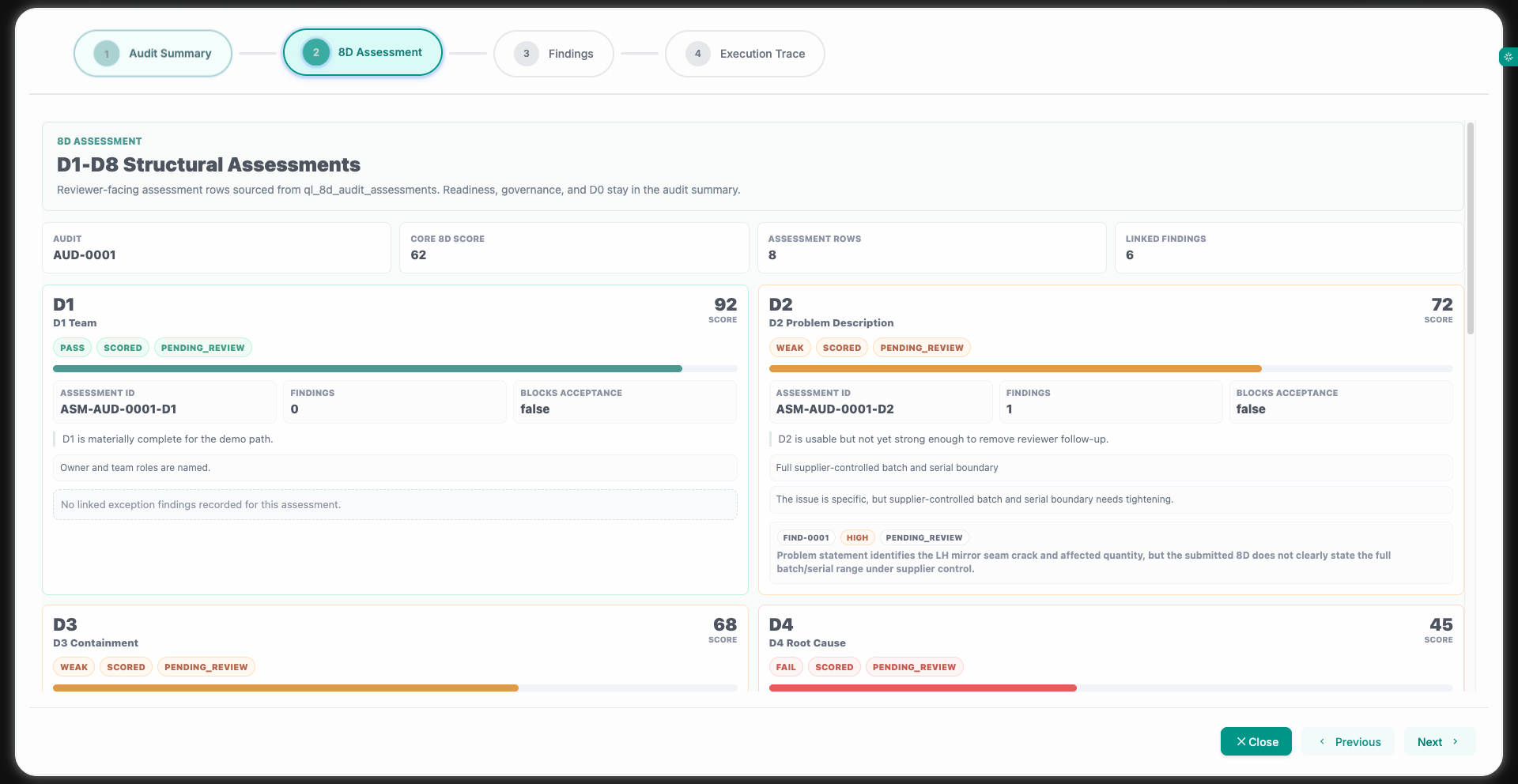
4. Keep human judgement explicit
The accountable reviewer examines the evidence and assessment, then confirms, adjusts or rejects findings. Severity, acceptance and escalation remain human decisions because they involve responsibility and operational consequence.
If the reviewer disagrees with AI support, that is not hidden failure. The difference can be retained as evidence for the decision and for later improvement.
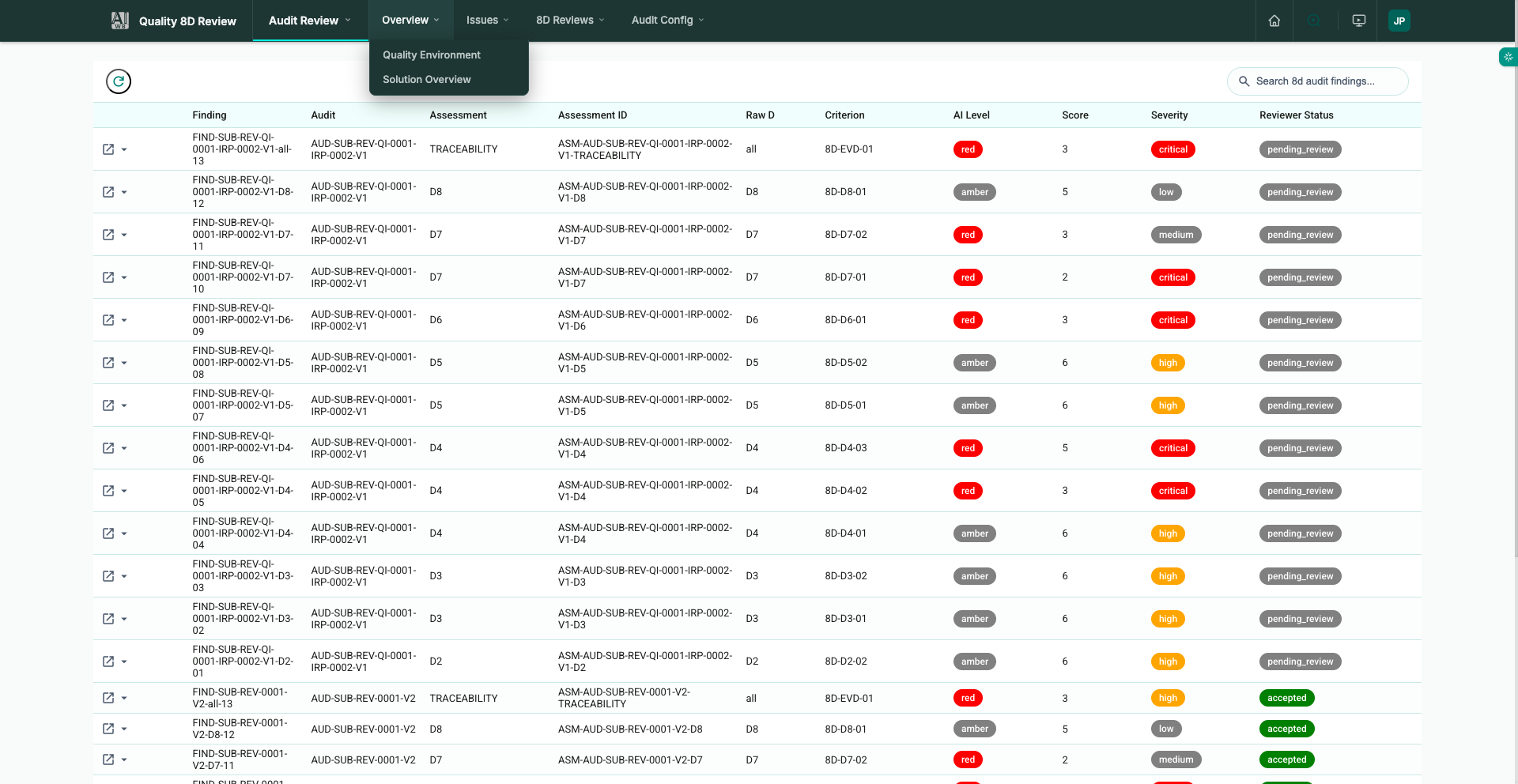
5. Retain findings and the decision route
The resulting findings are not detached from the case that produced them. The workflow can retain the sources, stages, AI-supported analysis, human review and resulting status together.
This makes it easier for an authorised future reader to understand what happened and why. The precise retention and assurance requirements would still need to be agreed for a live customer environment.
What this example does—and does not—prove
It demonstrates a coherent design pattern: deterministic controls for predictable work, AI assistance for selected interpretation, people accountable for consequential judgement, and evidence retained around the route.
It does not prove production performance, customer impact, security controls or suitability for a particular quality system. Those claims require real deployment facts, acceptance evidence and the relevant technical, legal and operational owners.
Explore the working demonstration
See the full sample-data story, operating map and evidence views.
Open the Quality 8D demonstration